Mental health can affect anyone, including students and young people. Sometimes you may notice that a friend, classmate, teammate, or someone you care about just doesn’t seem like themselves. They might be more withdrawn, seem overwhelmed, or tell you that they’re having a difficult time.
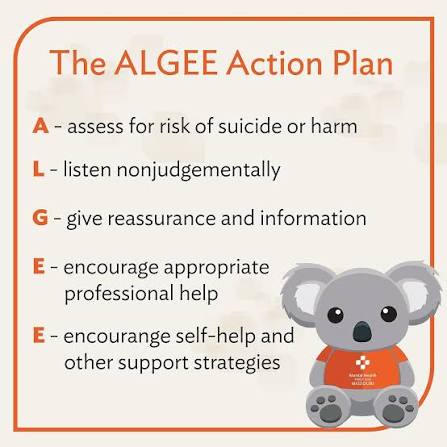
Knowing what to do in that situation isn’t always easy. You don’t have to be a counselor or have all the answers to be supportive. ALGEE is an action plan from Mental Health First Aid that can help you think about how to respond.
One important thing to remember is that ALGEE isn’t meant to be followed like a checklist. The steps can happen in different orders, and you may move between them depending on what the person needs.
A: Assess for risk of harm
Think about whether there may be an immediate safety concern. Pay attention to what the person is saying and how they are acting. If you believe someone is in immediate danger, get help from a trusted adult, professional, or emergency service.
L: Listen nonjudgmentally
Give the person a chance to talk. Try to listen without judging them or immediately trying to solve the problem. You can ask questions, give them your attention, and let them know you’re there for them. You don’t always need the perfect thing to say. Sometimes listening is a good place to start.
G: Give reassurance and information
Let the person know that struggling with mental health does not mean they have to handle everything on their own. You can share reliable information and remind them that help is available.
E: Encourage appropriate professional help
Friends can provide support, but they aren’t expected to handle serious mental health concerns on their own. Encourage the person to talk with someone who can help, such as a counselor, therapist, doctor, social worker, teacher, parent, or another trusted adult.
E: Encourage self-help and other support
Support doesn’t have to come from just one person. Encourage healthy ways of coping and help them think about people they trust who they could talk to. Having a support system can make it easier to ask for help when things feel difficult.
You don’t have to fix everything
Supporting someone doesn’t mean having all the answers or fixing what they’re going through. It can mean noticing when something seems wrong, listening without judgment, and helping them connect with people who can provide additional support.
If you’re worried about someone, you don’t have to figure it out alone either. Reaching out to a trusted adult or professional can be an important part of helping someone get the support they need.
Fun fact: ALGEE has its own koala mascot! The koala pays homage to Mental Health First Aid’s Australian roots and helps make the ALGEE Action Plan easier to remember.